|


Ralph Paglia created www.AutomotiveDigitalMarketing.com (ADM) in December 2007 to provide Car Dealers and Automotive Professionals with an online exchange for strategy, tactics, resources and networking within the auto industry.
|

The internet is ablaze with chatter of how Facebook is "backstabbing" advertisers and "corroding" the relationships between brands and the followers they have worked so hard to attain. Between Eat24's heartfelt breakup letter to Facebook and Nate Elliot's "told you so" article on Forrester's blog, many companies and commentators have very publicly voiced their opinion on Facebook's decision to limit organic reach and drive marketers to paid advertising.
But before you sever your social marketing ties with Facebook, take a second and review the situation. Facebook isn't necessarily backstabbing marketers (although it is trying to make money). Instead, the social network is simply growing up and going down the natural path of marketing evolution -- one that we've already seen with search.
It happened before
As former VP-search at Yahoo, I saw a similar pattern a decade ago. As part of their initial go-to-market plans, Yahoo and Google both offered free traffic for a limited time to business sites. As a result, Yahoo and Google were able to improve and refine the relevance of search while simultaneously building a large and loyal user base. Once they achieved this, both companies monetized their large audiences by offering advertising through Yahoo Overture and Google Adwords.
Businesses that initially enjoyed completely free site traffic had to start competing in paid search ads as well as search engine optimization in order to maintain position. Today, businesses understand that investing in paid search and SEO are necessary to drive relevant traffic to their sites. More recently, Google increased its focus on the quality of content in paid and organic search. When companies try to game the system with generic, bland content or excessive links, their rankings and traffic drop. If you want to keep rankings or traffic high, you have to pay attention to its criteria, pay to stay on top in sponsored links and keep up with SEO.
Facebook is protecting quality
We're witnessing the same process underway at Facebook, so don't take it personally. Facebook is not targeting or attacking the businesses it spent so many years cultivating -- it's just the natural evolution in marketing. There are now 1.3 billion people actively logging into Facebook every month, and similar to Google's and Yahoo's go-to-market strategies, Facebook has spent the last few years getting businesses hooked on the free traffic.
However, Facebook realizes that the value of traffic depends on the quality, not quantity, of content. There are many reasons people "like" or become a fan of a business page. Perhaps you are a loyal consumer. In many cases though, you probably liked a page for the chance to win a convertible, a free vacation or another one-off giveaway. This means that you don't want to always see offers or promotions from that brand. Without some boundaries, the current technique of spamming fans would eventually annoy users, driving down engagement and conversion for the business and Facebook.
Facebook targeting is evolving
Now that Facebook is prioritizing relevance, the ability to use predictive social analytics to identify quality content is more critical than ever before. The old method of inundating fans with multiple offers is no longer effective. Businesses must focus on messaging that their audience cares about.
But how do you know what your audience cares about? The answer is simple -- they tell you! Social media is a cornucopia of public information -- particularly facts about people's personal lives. Moreover, Facebook's recent implementation of hashtags and Instagram acquisition make it easier for companies to use predictive social analytics to identify hot leads, increasing the chance for conversion. From "#itsaboy" announcements to "#ihateapple" rants, consumers constantly tell businesses what they want (or don't want). Brands can then predict buying behavior based on these announcements of definitive events or personal preferences that require specific products or services.
The lesson of the story is: Don't let a few jaded commentators convince you that all hope is lost and don't let a few evolutionary marketing changes cause you to break up with Facebook. Instead, work to keep the relationship strong and effective by understanding the changes and adapting your strategy.
Or you could try taking a page out of Eat24's PR playbook. Its breakup letter may have gotten the company more attention than any of its previous campaigns. But there may be diminishing returns that way.
 | |||||||||
According to a recent Aberdeen ROI report, 95% of best in class marketers are using video as part of their content marketing mix. These marketers are seeing an average 4.8% website conversion rate with video versus 2.9% conversion rates for marketers that are not using video as part of their mix. SPEAKERS: | |||||||||
| |||||||||


This is a step-by-step tutorial for allowing you to pre-fill a form on your website with user's Facebook data such as his email, name, address, etc.
In order to get the user's Facebook data, the user has to be logged in your website with his Facebook account.
You need your Facebook app credentials (App ID and App Secret).
If you don't have a Facebook app registered or you don't know what that means, go to facebook.com/developers (I assume you already have a Facebook account) and click on "Set Up New App" and follow the wizard.
Important: make sure you filled "Site URL" and "Site Domain" with your infos. You are given an App ID and an App Secret that we will be using in step 2.
We are using the Facebook PHP SDK (see on github) to deal with authentication and make API calls.
require "facebook.php"; $facebook = new Facebook(array( 'appId' => '...', 'secret' => '...', )); $user = $facebook->getUser(); if ($user) { try { $user_profile = $facebook->api('/me'); } catch (FacebookApiException $e) { $user = null; } } <?php if ($user): ?> <form action="#" method="get"> <input type="text" name="name" value="<?php echo $user_profile['name'] ?>"> <input type="submit" value="Continue →"> </form> <a href="<?php echo $facebook->getLogoutUrl() ?>"> Logout of Facebook </a> <?php else: ?> <a href="<?php echo $facebook->getLoginUrl() ?>"> Login with Facebook </a> <?php endif ?>
Rolled out in late 2013, the Google search engine Hummingbird delivers answers instead of educated guesses. Powered by semantic search, results are returned based upon an understanding of what users are looking for—rather than a rank order of approximate answers based on keywords and Boolean parameters.
Implicit in Google's new methodology are significant changes for how marketers approach search engine optimization (SEO) and keywords. Now, every marketer needs to ask themselves: Do keywords even matter?
To answer that question, let's add some context (Hummingbird's specialty). First, we'll dig a little deeper into the concept of semantic search. Then we'll walk through five key takeaways for content creators and search marketers.
Semantic Search Explained
Semantic search is precisely interpreting the meaning among words in a search query. For a long time, that capability was just a distant hope. Instead, for years, Google and other search providers relied on keywords and links to determine the best answer to return for a specific search. Answers were returned rank-ordered as approximations based upon matched keywords on a website and the number of links to that site (with links seen as a "vote" of trust on the website's trust and authority).
Thus, keywords and links became the "virtual currency" of the pre-Hummingbird search economy. All search marketers know how that eventually worked out: Search engine results pages were polluted with misleading results, leading to websites with thin content and providing an unsatisfactory experience to the user.
How Hummingbird Results Are Different
Hummingbird makes the SEO tricks that caused the previously described mess too expensive to pursue. Instead, Hummingbird eliminates guesswork and capably interprets queries with associations. The words surrounding your keywords are now more precisely interpreted. The search engine is better able to discern the relationships between words and thus the context and the user's intent, delivering a much more relevant search result.
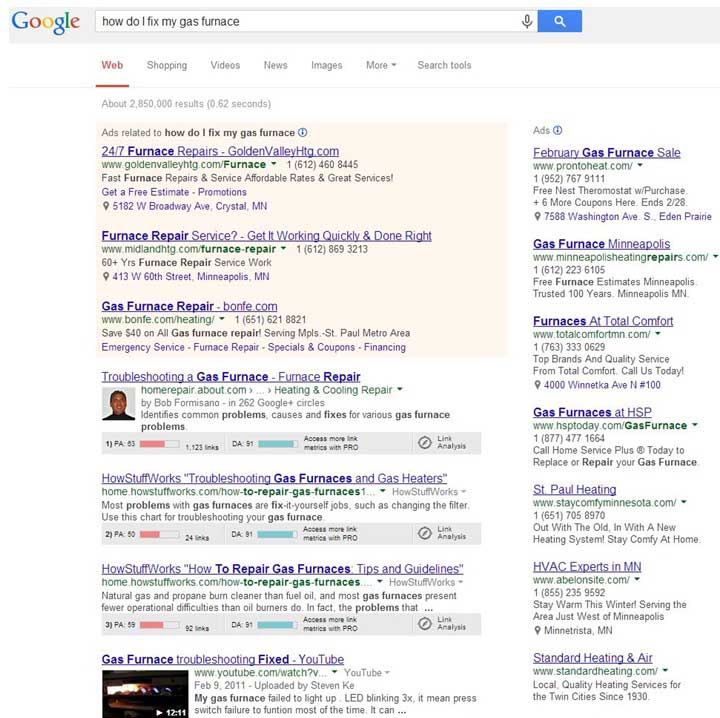
Here's an example to illustrate how semantic search works. Let's say a user typed in the question, "How do I fix the gas furnace in my home?" In past years the search engine bots would have honed in on the words "gas furnace" and "home." The results in the SERPs might have included gas furnace distributors, parts, and maybe repairmen.
With Hummingbird, however, a user gets exactly what he or she needs: tips on troubleshooting, "how to repair" (rather than "fix"), and even a YouTube video my wife will love (she's the handyman in our house). There's not a repairman in sight in the organic listings, though the smart repair firms advertised their services via pay-per-click advertising in case my wife can't finish the job.
Hummingbird understands the relationships among topics, themes, and videos, and how they relate to each other. Insufficient or inaccurate queries have a much higher probability of returning the desired result whether by design or accident (called "serendipity" by semantic search expert David Amerland).
With Hummingbird's more sophisticated capability to understand words, their meanings, and their relationships within a query, now marketers can include related words and synonyms.
The result: Keyword stuffing and keyword density need to be dropped from the lexicon of search marketers and SEOs.
So, Are Keywords Dead?
How does this sophisticated understanding of search queries by Google affect search marketers and content creators? Does an emphasis on user intent rather that keywords mean keywords are dead from an optimization perspective?
Here are five key points to address the question.
1. Keywords are now the tools used to discover and uncover user intent. All the words in a query are now important. Google can effectively link associations between words. That makes the query itself—all the words in it—much more important than before.
2. Remove the terms "keyword density" and "keyword architecture" permanently from your vocabulary. Flee from any marketing or SEO "guru" who uses those words. Content created merely to satisfy an optimization requirement (such as keyword density and architecture) for search engine ranking is a waste of time and effort.
3. Replace keyword research with user intent research. Keywords are still an integral part of content strategy. But what's more important is to determine the intent behind those keywords. Create content others will share with users' intent in mind, not the algorithm.
4. Use synonyms. Don't cram keywords down your visitors' throat. Keywords need to be employed in a natural way. Because Google has the ability to understand relationships much better, synonyms work equally well. Your keyword lists should grow exponentially.
5. Content creation, now more than ever, means writing for users—solving their problems, addressing their issues, and enriching their lives. Answer users' questions by creating content that does so.
Lastly, it is important to remember that Google's market dominance for search engine users stems from its ability to reliably supply the best, most precise results for a user query. Semantic search, under the aegis of Hummingbird, protects Google's business by ensuring users receive the best results from Google search.
 Source: http://www.MarketingProfs.com
| Learn more about your customers with Google Analytics. |
| |||||||||||||||||||||||||||||||||||||||||||||||||||||||||||||||||||||||||||||
#TravelLikeRalph is not as frivolous as you thought it was! |
#Philoselfie: Science behind selfie-expression Based on email received from Brian Solis
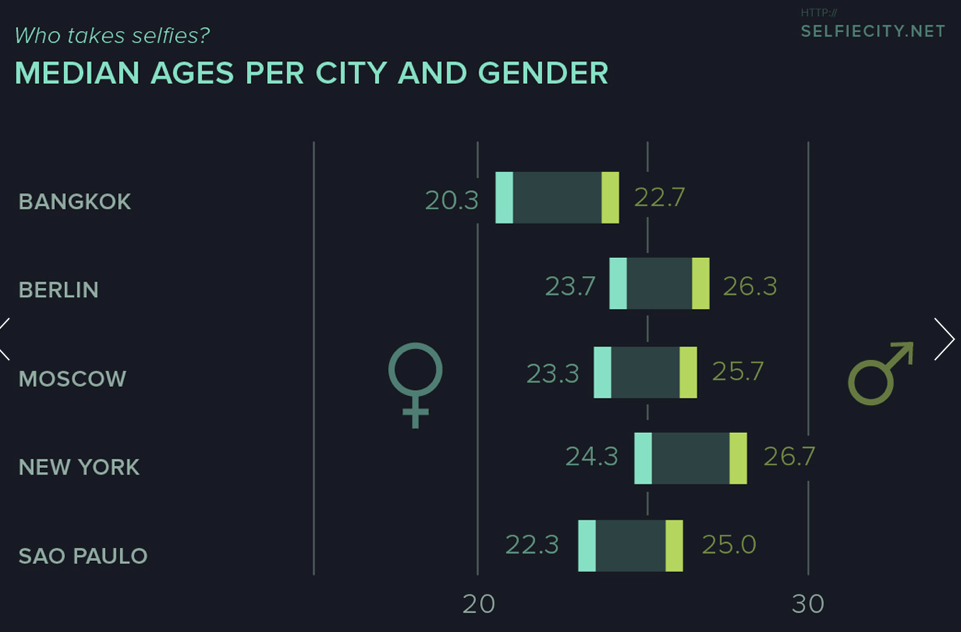
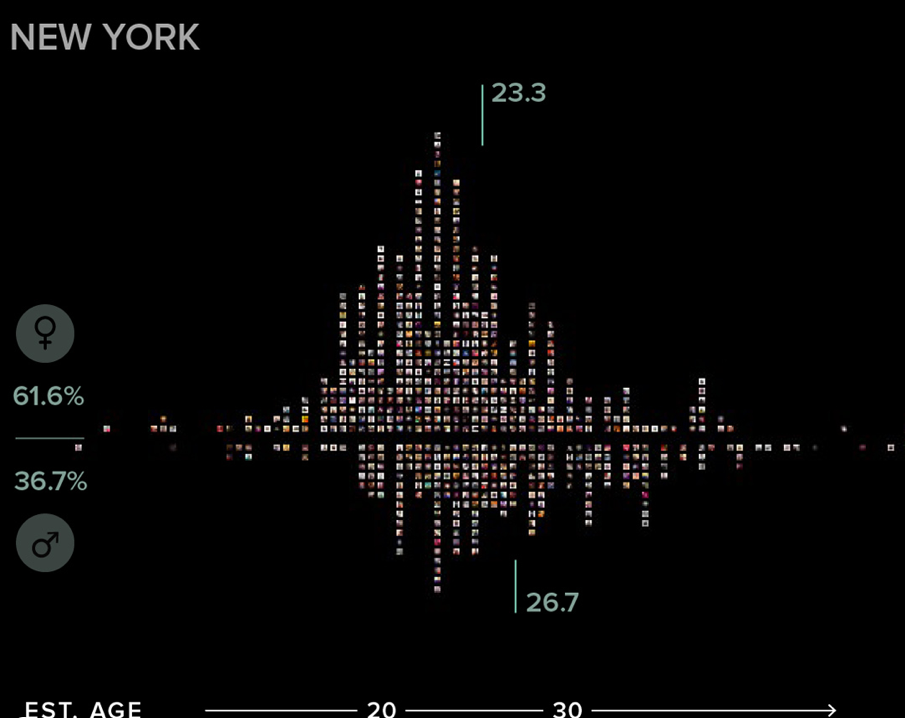
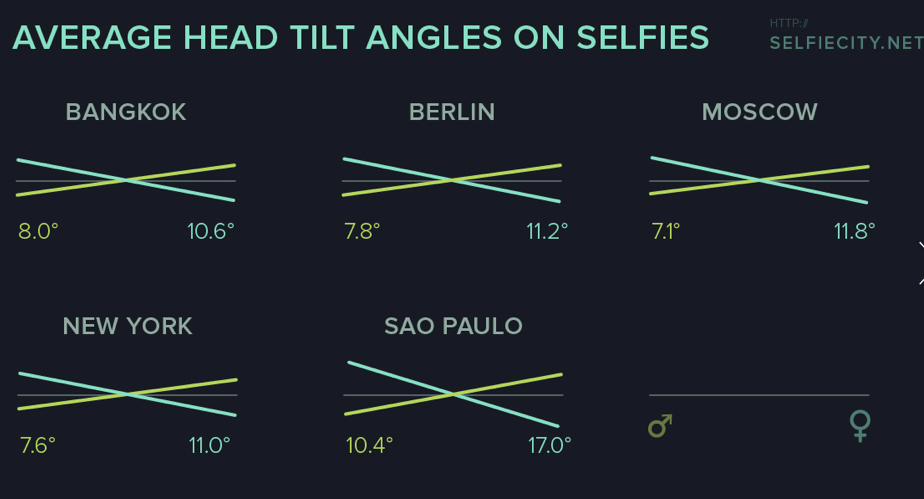
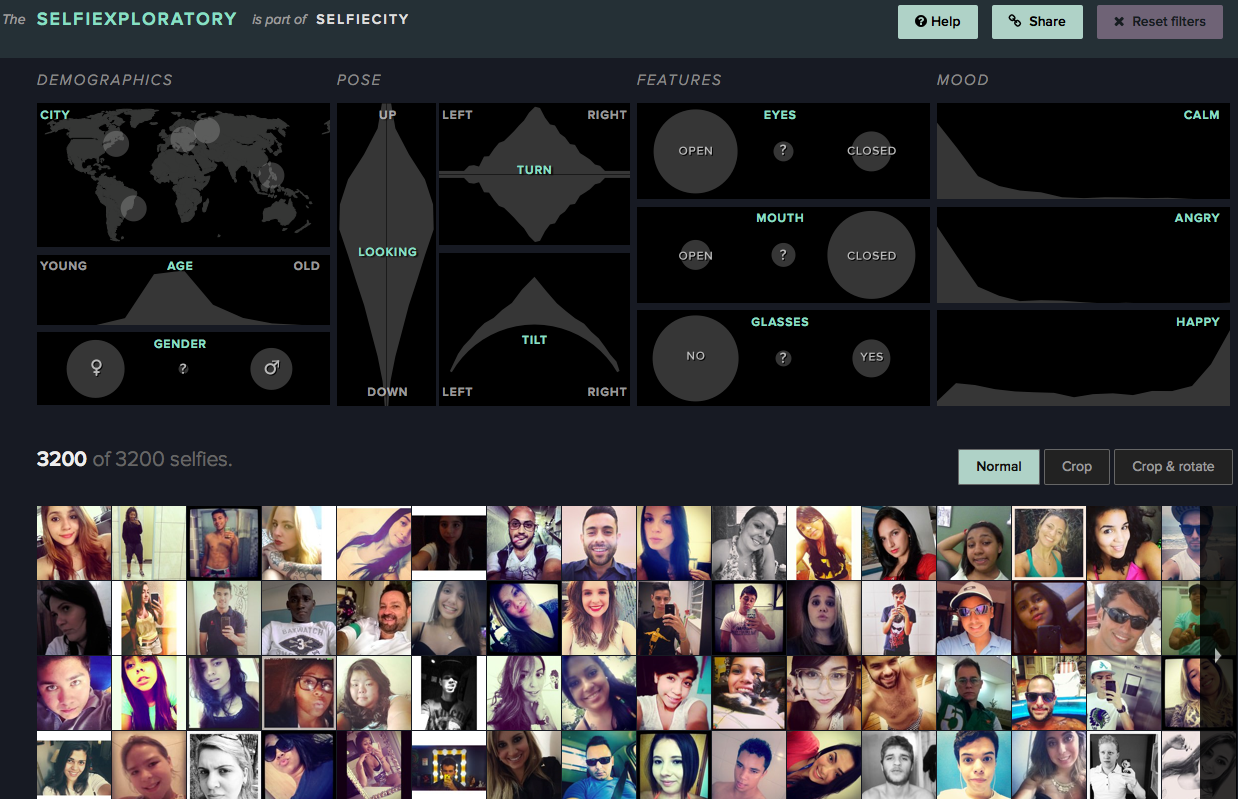
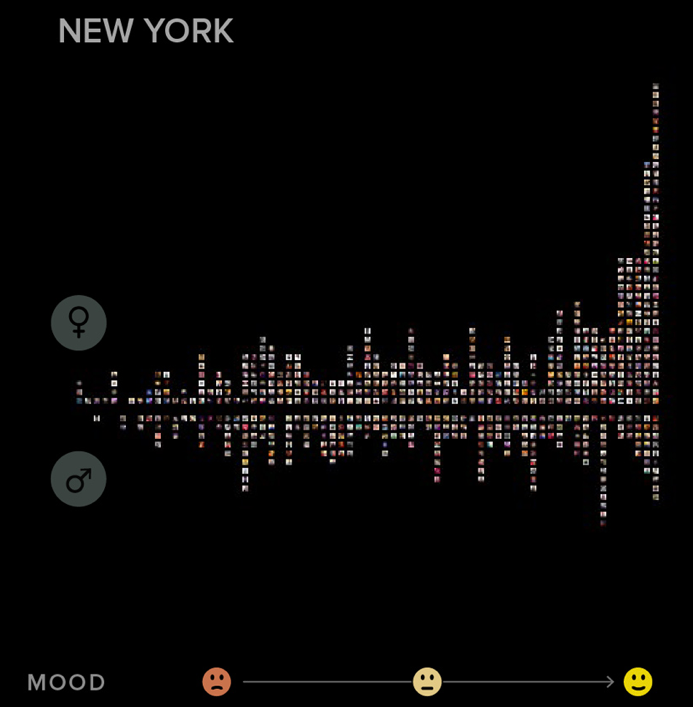
As the author of the #TravelLikeRalph "selfie" powered series of photo based posts, I felt compelled to share the following email update I received from Brian Solis... You can learn more about all of this at http://ADMPC.com or connect with me on Twitter and Instagram @RalphPaglia or at http://RalphPaglia.com . Oxford Dictionary's word of the year is also one of the most fascinating movements in social is that of the selfie. Part vanity, part communication, part fun, and part absurdity, selfies represent a new generation of #selfieexpression cum egotistical emoticons…but not necessarily in a bad way. Nevertheless, the psychology and science behind selfies are strangely fascinating and therefore Brian Solis continues to study and report on its evolution. Selfiecity, a new research project, studies Instagram data from five cities around the world including Bangkok, Berlin, Moscow, New York, and Sao Paulo. Wired initially reported on Selfiecity's initial findings. Brian didn't want to be selfie'ish with the information so, and neither did I, so we are sharing the highlights with you here. Right now, there are more than 79 million pictures on Instagram with the hashtag #selfie. You can add another 7 million for #selfies and 1 million for #selfienation. Not counted though, are the number of selfies that don't include a meta reference beyond the visual that you are indeed looking at a selfie. Then, there are the occasional self-branded selfie series, such as #TravelLikeRalph from @RalphPaglia and http://Facebook.com/RPaglia . As you can see, selfies is a form of communication among the (early) twenty somethings. Specifically in NY, more women (61.6%) share selfies than men (36.7%). But then again, there are historically more women active on social media than men as well. The average age for selfie-made women in NY is 23.3 whereas the age skews slightly higher for men at 26.7. I know this is a burning issue for everyone concerned here. Selfiecity also tracked visual cues such as angle of head tilt. Women in Sao Paulo as you can see, were the most expressive with body position and tilt at 17-degrees compared to 10.6-degrees in Bangkok and 11-degrees in New York. But wait, that's not all Selfiecity is tracking. You can learn more about poses, the state of eye contact, how many people where glasses, and whether or not people open or close their eyes and mouth in selfies. In summary: #noglasses and… Eyes wide open…mouth wide shut. I found this part particularly interesting. Selfiecity is also tracking the mood in each selfie. For the most part, people are happy, which hopefully conveys a positive sense of selfie-esteem or selfie-confidence In short, women are clearly smiling more than men. I guess that says something… Additionally the team at Selfiecity learned… On average, women tend to take more selfies than men. In Moscow, women account for 80% of the selfies. Yet, as people get older, this trend reverses. At or after age 40, men are more likely to take and post selfies than women. At 150%, women are more likely to tilt their heads in photos over men. According to Selfiecity's mood analysis, people in Bangkok and Sao Paulo appear to be happier than people in Moscow. Perhaps it's just that they're more selfie-satisfied. Please visit Selfiecity to explore the world of selfies for yourself. #philoselfie Connect with Brian Solis: Twitter | LinkedIn | Facebook | Google+ |Youtube | Instagram  |
| [Sent from Ralph's iPad] | |
President
Automotive Media Partners, LLC
 | |||||||||||||||||||||||||||||||||||||||||||||||||||||||||||||||||||||||||||||||||||||||||||||||